
 USD
USD GBP
GBP
 EUR
EUR

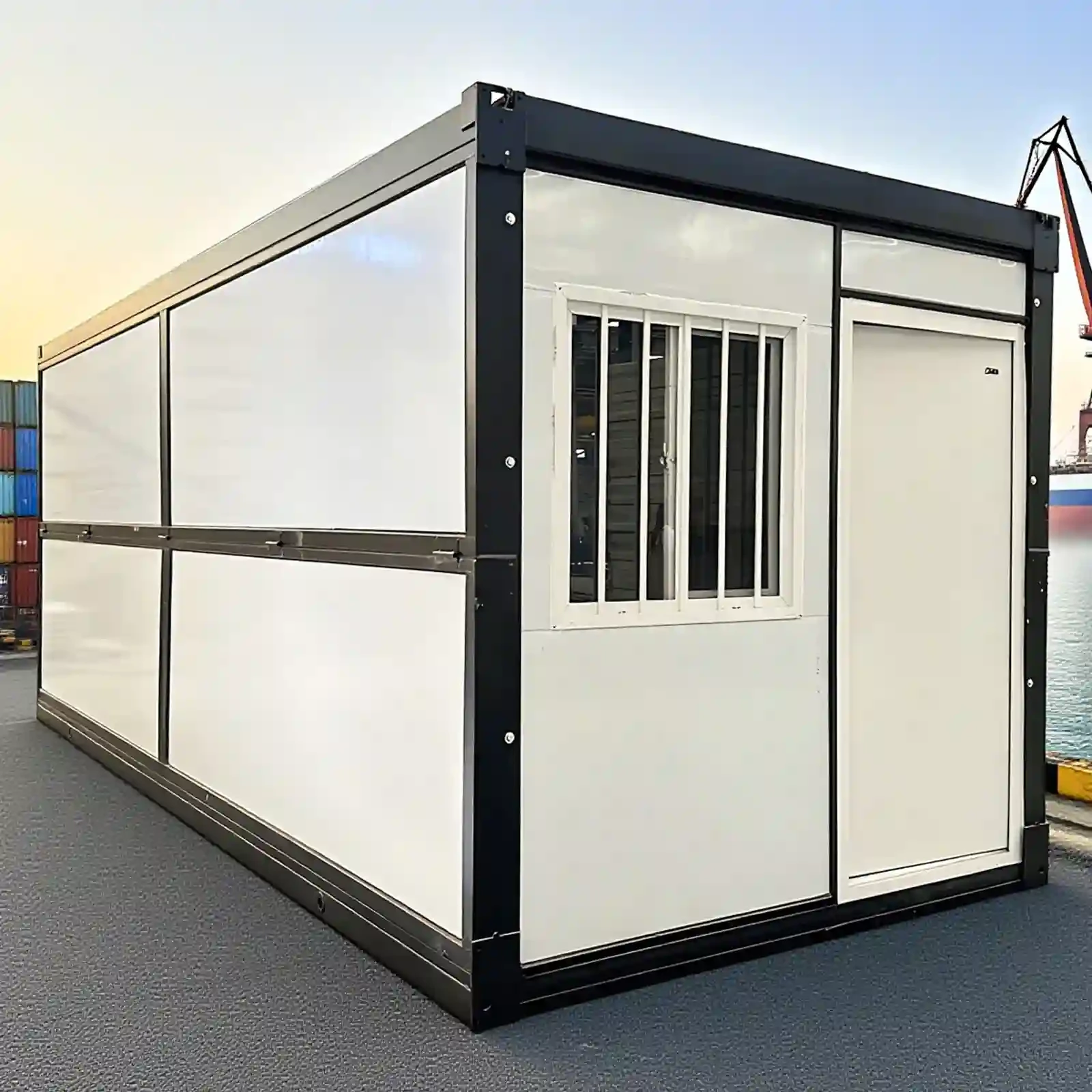







How Safe Are Space Capsule Homes?
Dec 11, 2025


In today's pursuit of personalized living experiences, space capsule houses have become a new favorite in architecture due to their futuristic design and flexible features. However, the small, enclosed space can easily lead to problems such as poor air circulation and noise interference. Achieving efficient air circulation and good sound insulation is crucial to ensuring the comfort of living in a space capsule house. Below, we will delve into the technologies and design ingenuity of space capsule houses in these two aspects.
I. Design of Air Circulation Systems in Space Capsule Houses
1. The Core Role of Mechanical Ventilation Systems
Space capsule houses are usually equipped with mechanical ventilation systems, which act as the "respiratory system" of the house, achieving air exchange and circulation through fans, ducts, and vents. There are two common types of mechanical ventilation: unidirectional and bidirectional. Unidirectional ventilation systems use an exhaust fan to expel stale air from the capsule, creating negative pressure inside. Fresh air from outside then naturally flows in through the air intake due to the pressure difference. This method is simple in structure and low in cost, suitable for scenarios where ventilation requirements are not extremely high. Bidirectional ventilation systems are more complex and efficient, possessing both an intake fan and an exhaust fan. They actively bring fresh air into the capsule while simultaneously expelling stale air, achieving forced air circulation and effectively improving ventilation efficiency.
2. Air Purification and Regulation Functions
To further improve air quality, space capsule houses often integrate air purification modules into their ventilation systems. These modules can filter out dust, pollen, smoke, and other particulate matter from the air, while also removing harmful gases such as formaldehyde and benzene, and absorbing odors, ensuring that the air inside the capsule remains fresh. In addition, some high-end space capsule houses are equipped with temperature and humidity control devices. Through air conditioners, humidifiers, and dehumidifiers, the temperature and humidity of the air inside the capsule are precisely controlled, creating a comfortable living environment for residents. For example, in the hot summer, the air conditioning system sends cool air into the capsule, while the ventilation system continuously refreshes the air, avoiding the stuffy feeling caused by the enclosed space; in the dry season, the humidifier increases air humidity, preventing residents from experiencing discomfort due to dry air.
3. Auxiliary Design of Natural Ventilation
In addition to mechanical ventilation, space capsule houses also pay attention to the design of natural ventilation. By strategically placing openable windows, skylights, or vents, natural convection can be used to circulate air in suitable weather conditions. For example, installing a skylight at the top of a space capsule house utilizes the principle of thermal pressure ventilation: hot air rises and exits through the skylight, while cooler outside air enters through windows or vents below, creating a natural air circulation. This natural ventilation method is not only energy-efficient and environmentally friendly but also allows residents to feel closer to nature.
II. Sound Insulation Technology and Measures for Space Capsule Houses
1. Selection and Application of Sound Insulation Materials
The walls, floors, and ceilings of space capsule houses typically use a multi-layered composite structure filled with high-efficiency sound insulation materials. Common sound insulation materials include glass wool, rock wool, and sound-absorbing panels. Glass wool and rock wool have a porous structure that effectively absorbs sound. When sound waves enter these materials, they are repeatedly reflected and refracted within the pores, gradually dissipating energy and achieving sound insulation. Sound-absorbing panels, through special surface treatment and internal structural design, enhance the absorption and reflection of sound. For example, wooden sound-absorbing panels not only have good sound insulation properties but also add a natural and warm atmosphere to the space capsule house. Using a double-layered wall structure with sound insulation material in between significantly improves sound insulation compared to a single-layered wall.
2. Sealing and Vibration Damping Design
Good sealing performance is crucial for sound insulation. Space capsule houses use high-quality sealing strips and materials in doors and windows to ensure a seamless seal when closed, preventing external noise from entering the cabin through gaps. To reduce noise generated by equipment operation, vibration damping treatment is applied to equipment such as air conditioners and fans, using vibration damping pads or brackets to reduce the transmission of vibrations to the building structure. Furthermore, sealing and vibration damping treatment are also applied to areas where pipes pass through walls and floors to prevent the transmission of noise generated by pipe vibrations.
3. Spatial Layout and Acoustic Design
A reasonable spatial layout and acoustic design also contribute to improved sound insulation. Bedrooms and resting areas, which are sensitive to noise, are placed away from noise sources (such as roads and mechanical equipment). Partitions or sound-insulating decorative materials are used between different functional areas to reduce sound interference between areas. In terms of acoustic design, the shape of the interior space and the reflection coefficients of the surface materials of the space capsule house are optimized to control sound propagation paths and reflections, avoiding acoustic defects such as echoes and standing waves, thereby further enhancing the quietness of the living environment.
Through a carefully designed air circulation system and diverse sound insulation technologies, the space capsule house effectively solves the problems of air circulation and noise in enclosed spaces, creating a comfortable and quiet living environment for residents. With continuous technological advancements and innovations, future space capsule houses are expected to achieve even higher performance in air circulation and sound insulation, providing people with an even better living experience.
Subscribe To Our Newsletter
You Can Get The News Of Our Products
SIGN UP
Contact Info
support@magespais.com
Payment Methods