
 USD
USD GBP
GBP
 EUR
EUR

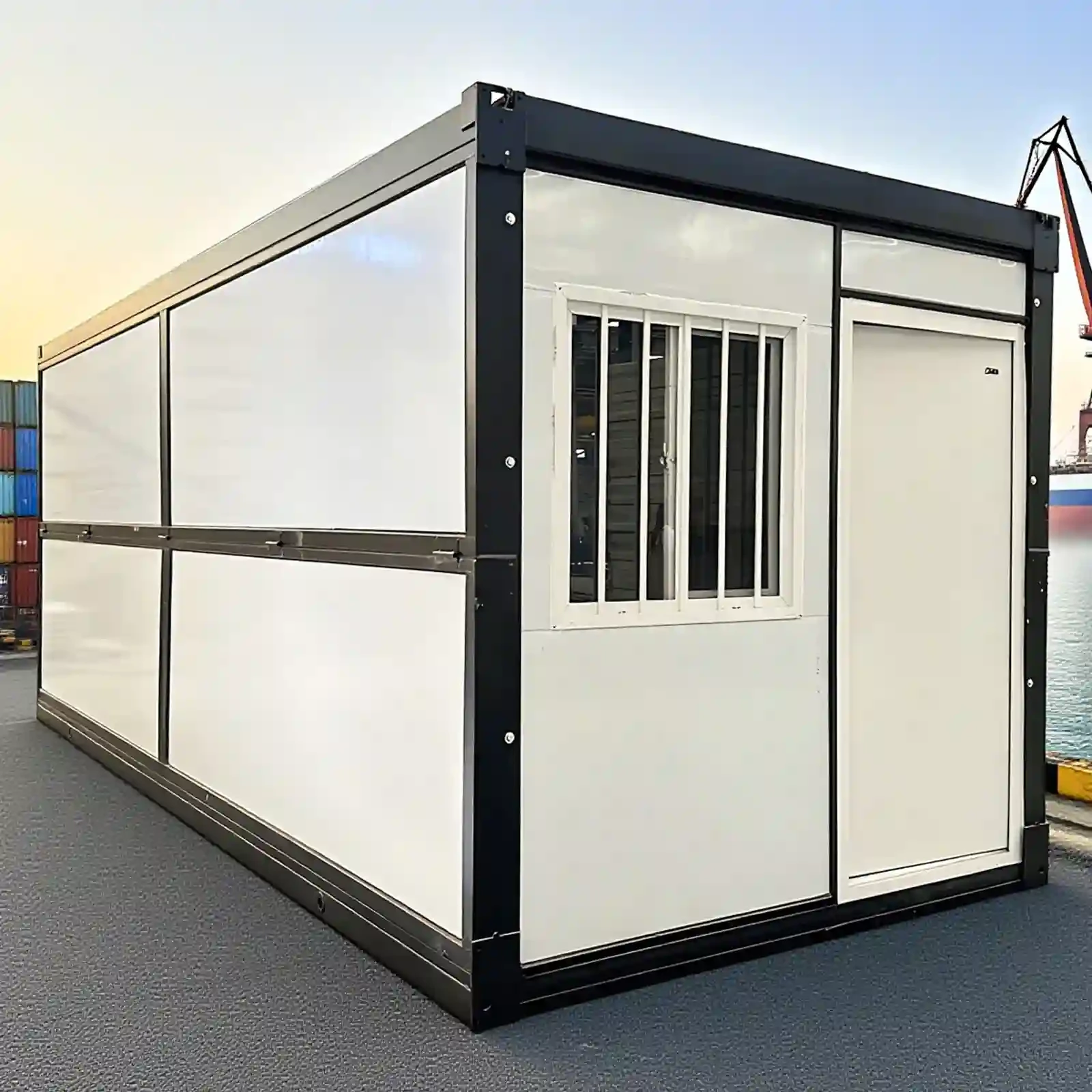







Basic knowledge of container houses
I. Steel Frame of Container House
The steel frame material can be hot-rolled steel plate or hot-rolled galvanized steel with a thickness of 2mm to 3.5mm. Unless otherwise specified by the customer, the frame thickness of the container house is 2.75mm (because 3mm thick steel plate is not available on the market now).
II. Surface Treatment Methods for Crossbeams, Columns, and Corner Fittings of Export Containers
1. When hot-rolled steel plates are used, first remove rust from the surface of the steel parts, then spray two coats of epoxy iron oxide red anti-rust primer with a thickness of 30μm and one coat of alkyd topcoat with a thickness of 60-70μm.
2. When hot-rolled steel plates are selected for galvanizing, the zinc layer content is ≥180g. Then, one coat each of epoxy primer and epoxy intermediate paint with a thickness of 10μm is sprayed, and finally one coat of alkyd topcoat with a thickness of 60μm is sprayed.
3. Corner fittings of the container house: The corner fittings adopt ISO standard dimensions, with a total of 8 corner fittings on the top, bottom, and four sides. The corner fittings are cast in one piece. The top plate thickness of the corner fittings used for the top frame is 20mm, and the top plate thickness of the corner fittings used for the bottom frame is 10mm. For easy movement and forklift transport, slots are welded on the long crossbeams at the bottom. The two slots are 1200mm apart, and the forklift slot size is 90mm × 280mm.
III. Composition of the base plate of export container houses
The bottom of the box consists of a bottom steel frame, a floor base layer, a floor surface layer, and floor edge trim strips.
The following are some options for the floor subfloor:
1. First type, multi-layer plywood: 18mm thick, with a waterproof membrane covering the surface, conforming to GB18580-2001E1 standard. Thermal conductivity 0.12W/(㎡k).
2. Second type: Cement fiberboard: 18mm thick, non-combustible Class A material, conforming to GB8624 standard. Thermal conductivity 0.3W/(㎡k).
IV. Top of the export container:
The roof panel consists of a 0.5mm thick color steel plate, a 50mm thick glass wool, and a 75mm thick foam board, which together provide good thermal insulation.
V. Advantages of Export Container Houses:
1. Convenient for transportation and hoisting; can be moved using forklifts or cranes.
2. High strength: The frame, supported by the upper and lower bottom frames and four columns, has high strength and can support the stacking of 2 to 3 layers.
3. Aesthetically pleasing: The wall is made of color steel sandwich panels with a small panel combination design. The product is scientifically connected, with a smooth and flat surface, and has high heat insulation, sound insulation and heat insulation effects.
4. Strong weather resistance: It has good resistance to corrosion from acids, alkalis, and salt spray, making it suitable for use in various humid and highly corrosive environments. It also features waterproofing, sound insulation, heat insulation, sealing, easy cleaning, easy maintenance, and an attractive appearance.
5. Wide range of applications: temporary offices, command centers, conference rooms, staff dormitories, as well as permanent shops, schools, container hotels, etc.