
 USD
USD GBP
GBP
 EUR
EUR

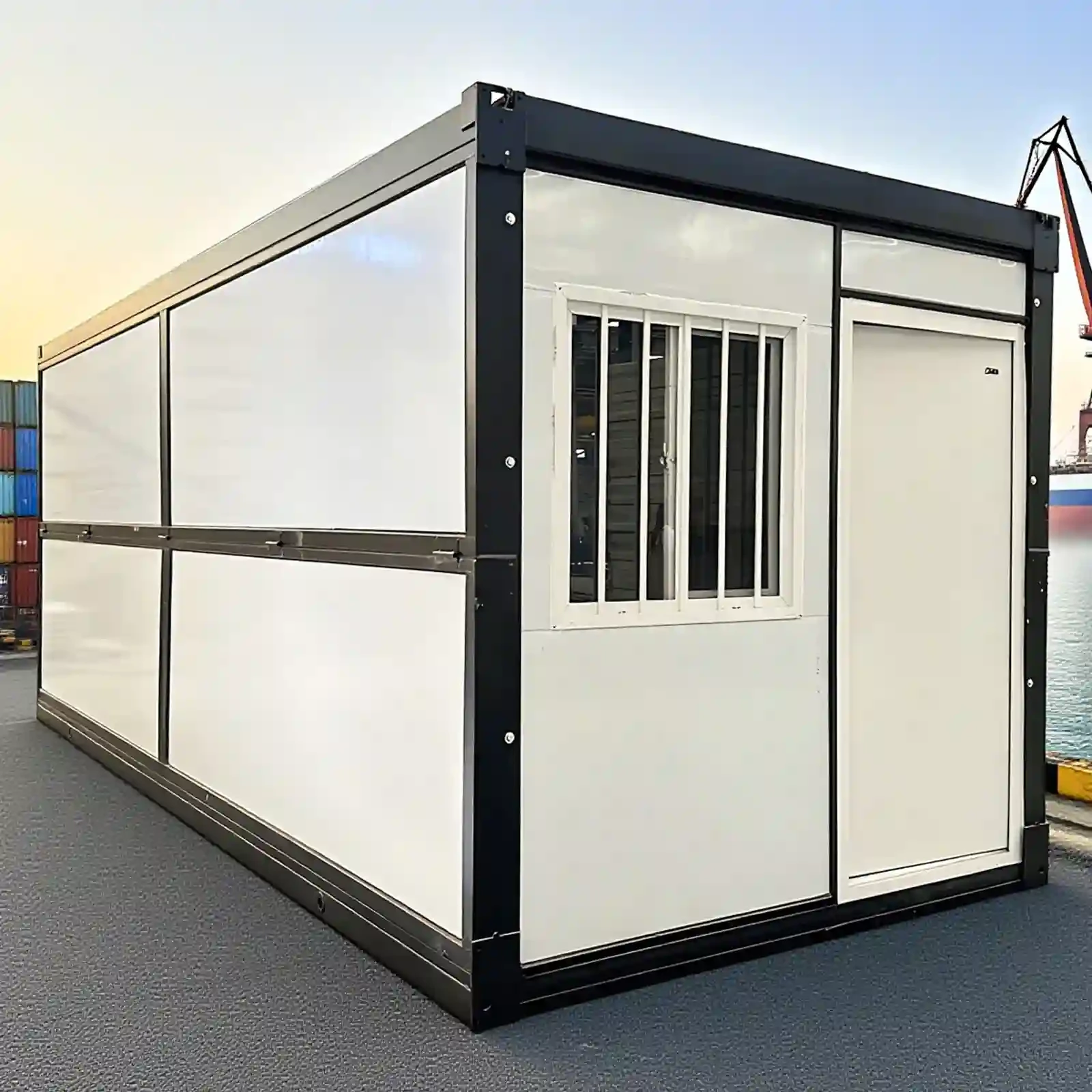







Are Capsule Homes Safe Against Earthquakes and High Winds?
Dec 23, 2025


In today's pursuit of high-quality living experiences, the sound insulation of a house has become one of the important indicators for measuring living comfort. For uniquely designed and compact capsule homes, their sound insulation performance is of great concern. The sound insulation performance of capsule homes is affected by a combination of factors, including the choice of building materials, structural design, construction techniques, and the environment in which they are used. Next, we will explore in depth how effective the sound insulation of capsule homes actually is.
I. The Influence of Building Materials on Sound Insulation
(I) Wall Materials
The walls are a key part of the sound insulation of capsule homes. To achieve good sound insulation, many capsule homes use composite wall structures. The outer layer usually uses high-strength metal sheets or fiber cement boards, which are sturdy and durable, able to withstand external physical impacts; the middle layer is filled with high-efficiency sound insulation materials, such as rock wool, glass wool, and polyurethane foam. Rock wool has excellent sound absorption properties; its porous structure can effectively absorb sound waves and reduce sound propagation. Glass wool also has a significant sound insulation effect; it can convert sound energy into heat energy, thereby reducing sound transmission. Polyurethane foam not only boasts excellent thermal insulation properties but also excels in sound insulation, its closed-cell structure effectively blocking sound transmission. Through this composite wall design, the space capsule house can significantly reduce the intrusion of external noise.
(II) Door and Window Materials
Doors and windows, as the connection between the house and the outside world, are weak points in sound insulation. High-quality space capsule houses place great emphasis on sound insulation performance in their door and window designs. Windows often use double or triple-pane insulated glass, with inert gas (such as argon) filling the space between the panes. This design effectively reduces sound transmission. The air layer or inert gas layer in the insulated glass acts as a barrier, blocking the sound propagation path, improving sound insulation by 20-30 decibels compared to single-pane glass. Simultaneously, the window frames are made of thermally broken aluminum or PVC, materials that inherently possess good sound insulation properties and can be tightly bonded to the glass, reducing gaps and further enhancing sound insulation. For doors, solid soundproof doors are mostly used, with sound-insulating materials filled inside the door panels and sealing strips on the door frames to ensure a good sealed space when the door is closed, blocking the intrusion of external noise.
II. Structural Design Optimization of Sound Insulation
(I) Overall Structural Sealing
The overall structural design of the capsule house has a significant impact on the sound insulation effect. Good sealing is the foundation for ensuring sound insulation performance. During the assembly process, precise connections are used between various components, and sealing strips and sealants are used for sealing. For example, the joints between house modules and pipe penetrations are strictly sealed to prevent sound from propagating through gaps. In addition, the roof and floor of the house are also specially treated, with added sound insulation layers to reduce noise interference between floors. Through these measures, the capsule house can form a relatively enclosed space, effectively blocking the entry of external noise.
(II) Vibration Reduction Design
Besides the direct transmission of sound, vibration is also an important factor in noise generation. Vibration reduction measures are usually considered in the structural design of capsule houses to reduce noise generated by external vibrations or equipment operation. For example, installing shock absorbers or pads at the base of the house absorbs and cushions vibration energy, reducing the impact of vibrations on the building structure and thus reducing noise. Equipment installed inside the house, such as air conditioner units and water pumps, is also equipped with vibration-damping brackets to prevent vibrations from being transmitted to the building structure, further improving sound insulation.
III. The Impact of Construction Techniques on Sound Insulation
The quality of construction techniques directly affects the sound insulation performance of the capsule house. Every detail is crucial during construction. For example, when installing sound insulation materials, it is essential to ensure a tight fit without gaps, otherwise the sound insulation effect will be compromised. During the installation of walls and doors/windows, installation precision must be ensured to avoid gaps. If doors and windows are not installed tightly, even high-quality soundproofing materials will not achieve the desired sound insulation effect. Furthermore, strict sealing and soundproofing treatment must be applied to areas where pipes and wires penetrate walls to prevent sound transmission. Only by strictly adhering to construction specifications and paying attention to every detail can the sound insulation effect of the capsule house achieve the expected goals.
IV. Impact of Actual Usage Environment on Sound Insulation
(I) External Environmental Noise
The usage environment of the capsule house has a significant impact on its sound insulation effect. If the house is located near busy streets, airports, or factories—areas with high noise levels—even if the house itself has good sound insulation performance, it may still be subject to some degree of noise interference. In this case, the sound insulation effect of the house will be affected by the intensity and frequency of external noise. For high-frequency noise, such as the roar of airplanes and the sound of car horns, the intensity of its transmission into the room can be effectively reduced by properly selecting sound insulation materials and optimizing structural design. However, for low-frequency noise, such as the vibration sound generated by vehicles and the roar of industrial equipment, due to their longer wavelengths and longer propagation distances, they are more difficult to block and require special sound insulation measures, such as adding vibration damping devices and using low-frequency sound insulation materials, to achieve a better sound insulation effect.
(II) Internal Usage
The internal usage of the house also affects the sound insulation effect. Activities such as loud talking, playing music, and using noisy equipment inside the capsule house will generate internal noise, affecting the comfort of the residents. Meanwhile, internal noise can also propagate to adjacent rooms or the external environment through the building structure. Therefore, controlling internal noise appropriately is crucial for improving living comfort. For example, during renovation, choose sound-absorbing materials such as sound-absorbing wallpaper and curtains to reduce sound reflection and propagation. When using electrical appliances, choose products with low noise levels and plan their use and placement to avoid disturbing others.
The sound insulation of capsule homes largely depends on the choice of building materials, structural design, construction techniques, and the environment in which they are used. By using high-quality sound insulation materials, a reasonable structural design, and meticulous construction techniques, capsule homes can achieve good sound insulation performance, creating a quiet and comfortable living environment for residents. However, in actual use, the impact of the external environment and internal usage on sound insulation must be considered, and corresponding measures should be taken to optimize and improve it. With continuous technological advancements and increasing demands for living environments, the sound insulation performance of capsule homes is expected to be further improved, bringing a more tranquil living experience.
Subscribe To Our Newsletter
You Can Get The News Of Our Products
SIGN UP
Contact Info
support@magespais.com
Payment Methods