
 USD
USD GBP
GBP
 EUR
EUR


How Wide Is a Single Wide Mobile Home | Size Guide 2025
Dec 16, 2025


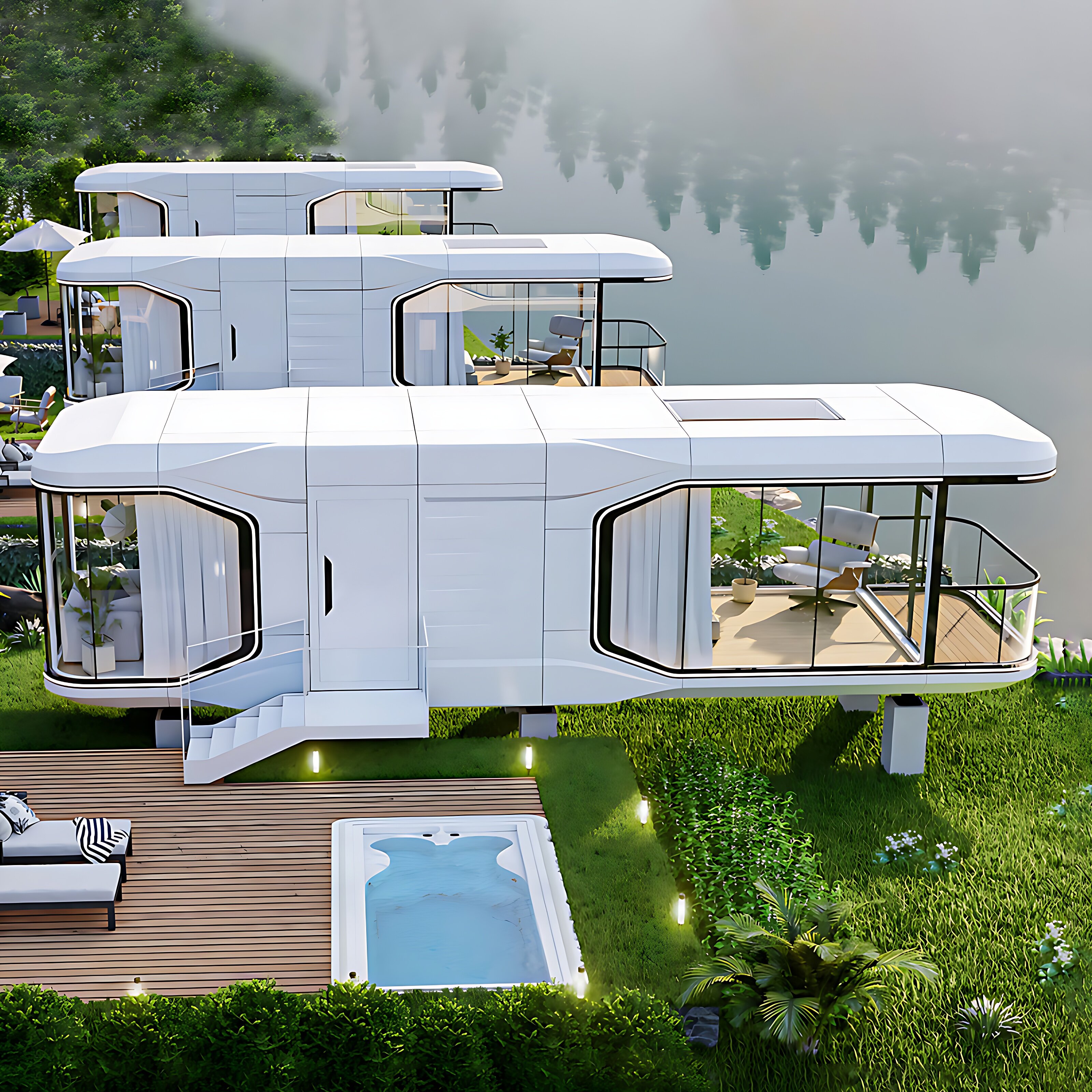
In the construction industry, space capsule houses are gradually becoming an emerging architectural form due to their unique design, convenient installation methods, and flexible space utilization. For individuals or businesses interested in using space capsule houses, the construction period is a crucial concern. The construction period of a space capsule house is not a fixed value; it is influenced by many factors, including the construction method, house size, and construction conditions. Below, we will explore these influencing factors and their corresponding construction periods in detail.
I. Impact of Construction Method on Construction Period
(I) Prefabricated Modular Construction
Prefabricated modular construction is a common method for building space capsule houses. In this method, the various modules of the space capsule house are pre-manufactured in a factory, including structural construction, interior decoration, and electrical and plumbing installation. These modules are then transported to the site for assembly. Due to the stable factory production environment, unaffected by weather and other external factors, production efficiency is high, allowing for standardized, assembly-line production. For example, a single small space capsule house module typically takes 7-10 days to produce in the factory.
For transportation, if the distance is short, it can be completed in 1-2 days; if the distance is longer, it may take 3-5 days. On-site assembly is relatively fast; for simple, small space capsule houses, assembly and debugging can be completed in 1-3 days. Overall, for small space capsule houses using prefabricated modular construction, the construction period from production to commissioning is approximately 10-20 days. For larger projects with more modules, although the production time for each module remains basically the same, the increased number of modules will extend the transportation and assembly time, resulting in an overall construction period of approximately 30-60 days.
(II) On-Site Construction
On-site construction involves building the space capsule house directly at the construction site. This method is more constrained by on-site conditions, such as weather and site space. First, during the foundation construction phase, depending on the geological conditions, foundation work such as laying the foundation may take 5-15 days. Then, the main structure is built. Due to the lack of efficient assembly-line production in a factory setting and the need to deal with various on-site contingencies, the construction time for the main structure will be much longer than with prefabricated modular construction. Building the main structure of a small space capsule house may take 15-30 days. The interior decoration and plumbing and electrical installation phases are also relatively complex in the on-site construction model, requiring the gradual completion of wall treatment, floor laying, and wiring installation, which takes approximately 20-40 days. Therefore, the construction period for small space capsule houses using on-site construction is generally 40-90 days; for large space capsule house complexes, the construction period may be as long as 3-6 months or even longer.
II. Impact of House Size and Complexity on Construction Period
(I) House Area and Number of Floors
House area and the number of floors are important factors affecting the construction period. Smaller, single-story space capsule houses require relatively fewer building materials and less construction work, resulting in a shorter construction period. For example, a single-story small space capsule house under 50 square meters, using prefabricated modular construction, may only take 10-15 days from production to completion of installation; while a multi-story space capsule house over 100 square meters will significantly increase the number of prefabricated modules required, as well as the difficulty and workload of on-site assembly, potentially extending the construction period to 40-60 days.
(II) Functionality and Design Complexity
The functional requirements and design complexity of space capsule houses also affect the construction period. If it only meets basic living functions and has a simple interior layout, the construction difficulty is low, and the construction period is relatively short. However, if the space capsule house needs to have special functions, such as intelligent control systems, high-end audio-visual entertainment systems, etc., or has complex shapes and unique structures in its design, more time will be needed for design planning, material procurement, and construction and installation. For example, a space capsule house with a smart home system and personalized exterior design may have a construction period 10-20 days longer than a standard house.
III. Impact of Construction Conditions and External Factors on Construction Period
(I) Site and Environmental Conditions
The conditions of the construction site significantly affect the construction period. If the site is flat and easily accessible, facilitating the transportation of building materials and the entry of construction equipment, it can effectively improve construction efficiency and shorten the construction period. Conversely, if the site is located in a mountainous area with complex terrain or a remote area with inconvenient transportation, material transportation is difficult, and equipment access is limited, which will greatly extend the construction time. In addition, environmental conditions such as climate factors should not be ignored. During adverse weather conditions such as the rainy season and winter, on-site construction is severely affected. For example, foundation pouring cannot be carried out during rainy days, and low temperatures affect concrete setting, potentially extending the construction period by 10-30 days or even longer.
(II) Material and Equipment Supply
The supply of building materials and equipment directly impacts the construction period. If the required materials and equipment are readily available and delivered on time, construction can proceed smoothly; conversely, if there are material shortages or equipment malfunctions, construction will be forced to stop. For example, delays in the supply of customized special doors and windows or high-end decorative materials may cause the entire project to halt, extending the construction period by several days or even weeks. The normal operation of construction equipment is also crucial; if critical equipment malfunctions during construction and cannot be repaired or replaced promptly, it will seriously affect the construction progress.
(III) Policies and Approval Processes
Policies, regulations, and approval processes are also external factors affecting the construction period. Before building a space capsule house, relevant planning and construction approval procedures are required. If the approval process is cumbersome and time-consuming, it will delay the start of the project. Approval policies and efficiency vary in different regions; some regions have simple approval processes that can be completed in 1-2 weeks, while others have complex approval procedures that may take 1-3 months or even longer, which will undoubtedly lengthen the entire construction period.
The construction period of a space capsule house is influenced by various factors, including construction methods, house size, and construction conditions, resulting in a considerable range of variability. Small, functionally simple space capsule houses built using prefabricated modular construction have shorter construction periods; while large, complex projects built on-site have longer construction periods. When planning the construction of a space capsule house, fully considering these factors and reasonably arranging the construction plan will help shorten the construction period and improve construction efficiency.
Subscribe To Our Newsletter
You Can Get The News Of Our Products
SIGN UP
Contact Info
support@magespais.com
Payment Methods