
 USD
USD GBP
GBP
 EUR
EUR

Cozy and Stylish Double-wide Mobile Home Porch Ideas
Dec 05, 2025


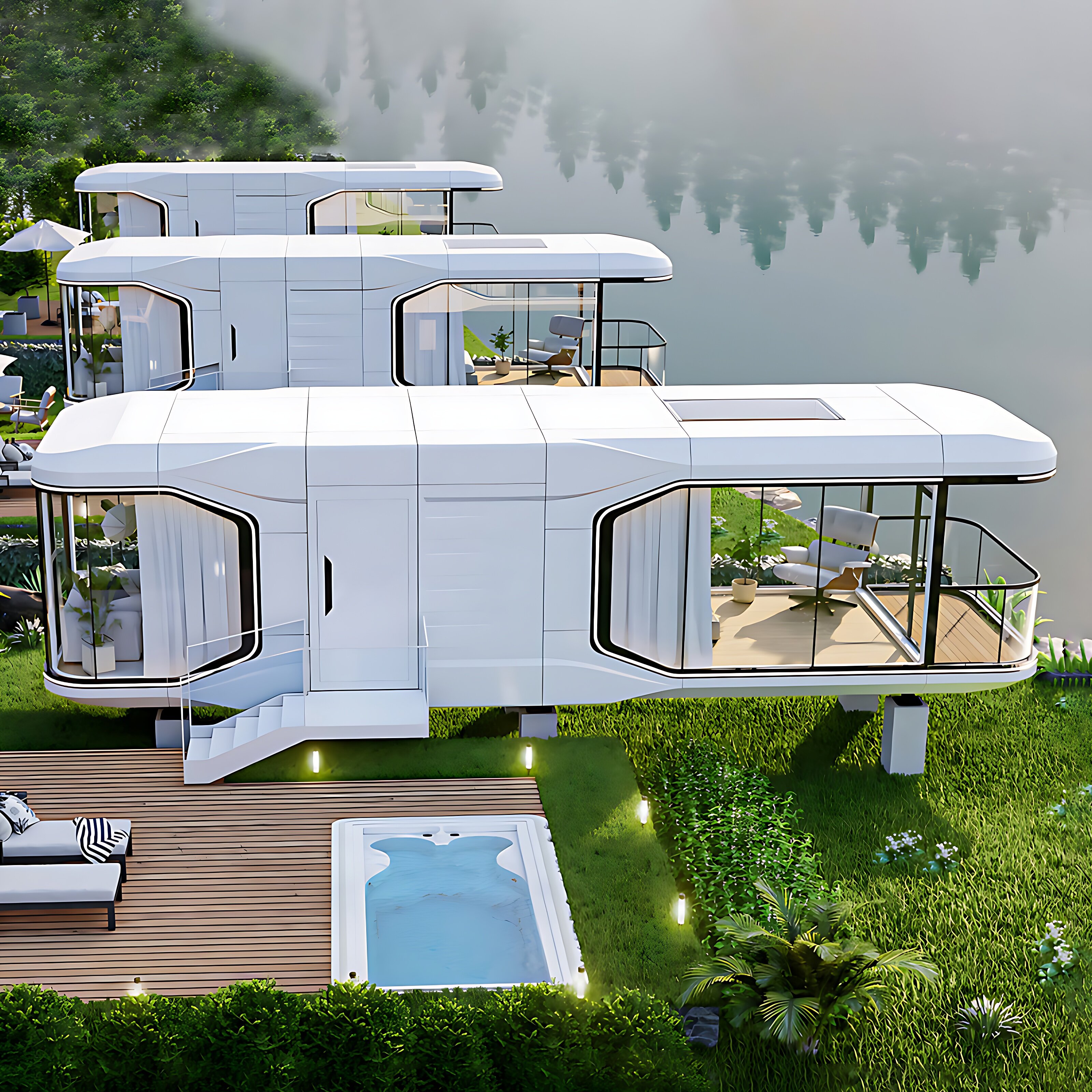
In today's innovative construction industry, capsule homes have attracted considerable attention due to their unique appearance and convenience. However, construction costs and lifespan are crucial factors determining their widespread application. For investors, consumers, and construction industry professionals, understanding these two key issues helps in assessing the actual value and application potential of capsule homes.
I. Composition of Capsule Home Construction Costs
(I) Material Costs
Material costs account for a large proportion of the total cost of capsule homes. The main structural materials are typically steel or aluminum alloy. High-strength steel is relatively inexpensive, with a construction cost of approximately 800-1200 yuan per square meter; while aluminum alloy, due to its lightweight and corrosion resistance, is relatively expensive, costing 1500-2000 yuan per square meter.
Walls and roofs often use composite panels, such as polyurethane sandwich panels and rock wool sandwich panels. These panels offer excellent thermal insulation, heat insulation, and waterproofing properties. Prices vary depending on the material and thickness, generally ranging from 200 to 500 yuan per square meter. Furthermore, interior finishing materials such as flooring, wall decorations, bathroom fixtures, and furniture also impact costs. Using high-end customized materials and smart home devices significantly increases costs.
(II) Design and R&D Costs
The design of a space capsule home requires comprehensive consideration of factors such as space utilization, functional layout, appearance, and structural safety. Professional design teams are expensive, with design costs typically accounting for 5%-10% of the total cost. Additionally, to achieve a unique appearance and innovative functions, some space capsule homes require R&D investment, such as the application of new materials and the development of intelligent control systems, all of which increase overall construction costs.
(III) Transportation and Installation Costs
Since space capsule homes are mostly produced modularly, they need to be transported to the site for assembly after production. Transportation costs depend on the transportation distance, method, and the size and weight of the space capsule. Long-distance transportation may require specialized equipment, resulting in relatively high costs.
Regarding installation costs, although the installation of capsule homes is relatively convenient, it still requires a professional construction team. Generally, installation costs account for 10%-15% of the total cost. If the installation site has complex terrain, such as mountains or the seaside, additional foundation treatment and hoisting equipment are needed, further increasing installation costs.
(IV) Other Costs
In addition to the above costs, there are also approval fees, insurance fees, and potential accrual of later maintenance costs. In some areas, building capsule homes requires relevant approval procedures, which may involve certain fees. At the same time, to ensure project safety, it is also necessary to purchase construction insurance, all of which will affect the total cost.
Overall, the construction cost of a standard-sized capsule home is approximately 2000-4000 yuan per square meter. If high-end materials and customized designs are used, the cost may exceed 5000 yuan per square meter.
II. Factors Affecting the Service Life of Capsule Homes
(I) Material Quality and Durability
The quality of materials directly determines the service life of the capsule home. High-quality steel or aluminum alloys, after special treatments such as hot-dip galvanizing and anodizing, can effectively enhance their corrosion resistance and extend their service life. For example, hot-dip galvanized steel can have a rust-proof lifespan of over 50 years. Composite panels for walls and roofs, if possessing good weather resistance and anti-aging properties, can also maintain stable performance during long-term use.
(II) Construction Process and Quality
Standardized construction processes and strict construction quality control are crucial to ensuring the lifespan of the space capsule house. During production, the precision and connection methods of modular components are paramount; during installation, the stability of the foundation and the tightness of the connections between components affect the overall performance of the house. Improper construction can lead to structural loosening, reduced waterproofing, and other problems, shortening the house's lifespan.
(III) Usage Environment and Maintenance
The usage environment of the space capsule house has a significant impact on its lifespan. In coastal areas, high humidity and salt spray environments easily accelerate the corrosion of metal materials; in frigid regions, extreme temperature changes can cause material shrinkage and deformation. Therefore, taking appropriate protective measures according to different usage environments is crucial.
Meanwhile, regular maintenance is also an important means of extending its service life. For example, regular inspection and maintenance of the anti-corrosion layer of the steel structure, timely repair of damaged waterproof sealant, and cleaning of the drainage system are essential. Generally, under normal use and maintenance conditions, the lifespan of a capsule house can reach 20-30 years, and can be even longer if high-quality materials and advanced technology are used.
The construction cost of a capsule house is affected by various factors, and investors and consumers need to make reasonable choices based on their own needs and budgets. Its lifespan depends on many factors, including material quality, construction techniques, usage environment, and maintenance. Through scientific design, rigorous construction, and standardized maintenance, capsule houses can achieve a longer lifespan while meeting functional requirements, creating greater value for users.
Subscribe To Our Newsletter
You Can Get The News Of Our Products
SIGN UP
Contact Info
support@magespais.com
Payment Methods